Resource Templates*
Resource templates can be set up to streamline data collection while maintaining flexibility for each resource's data capture.
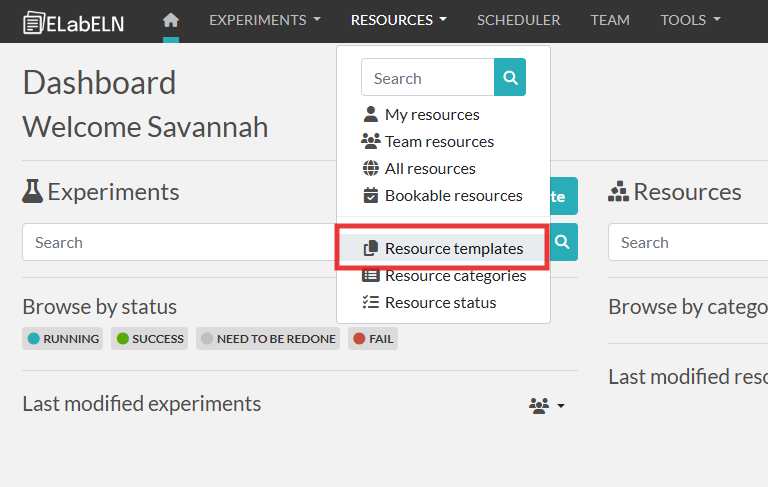
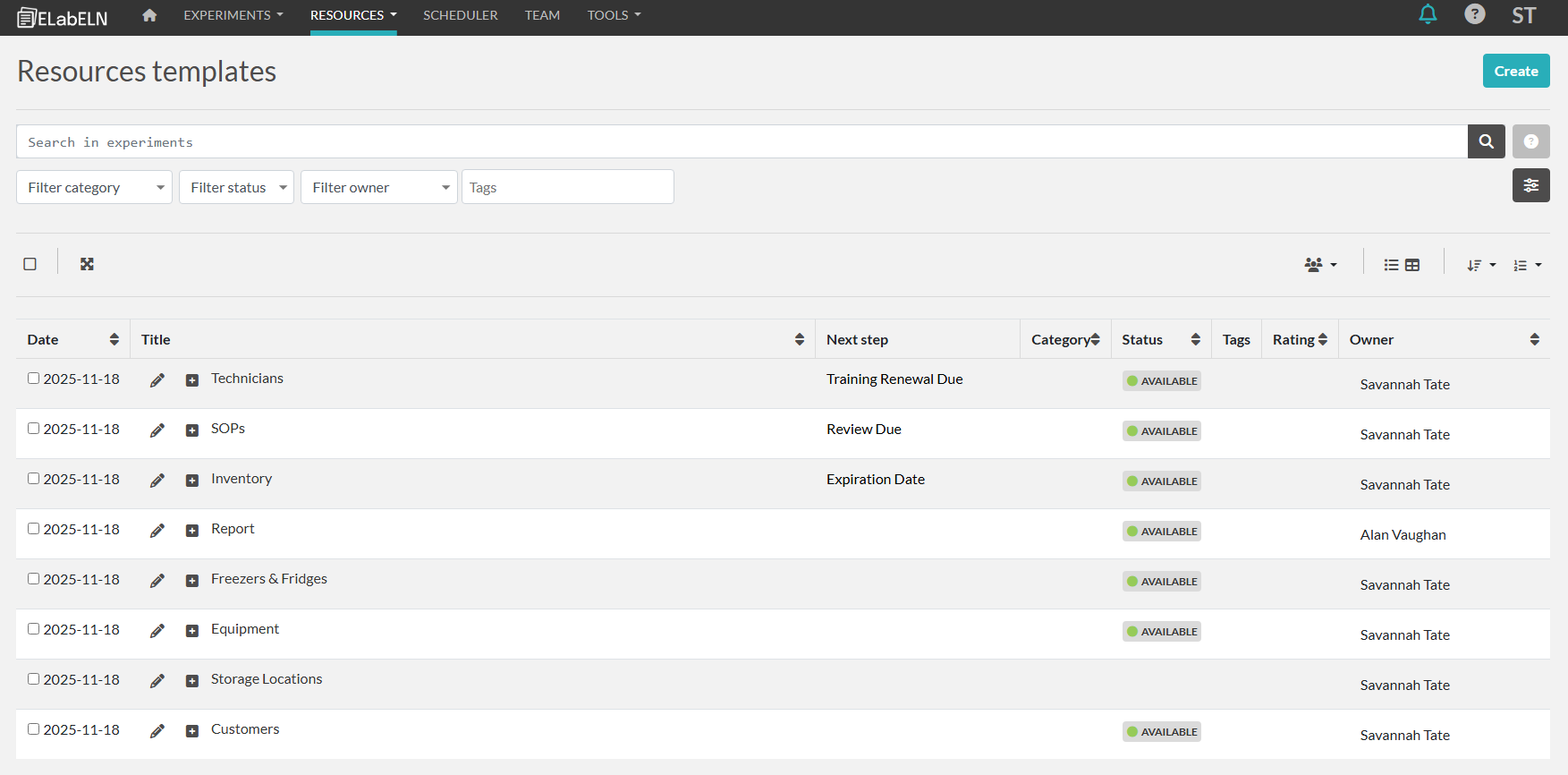
From the templates page, you can search, filter, and change the view of the templates similar to the resources list screen. Clicking the pencil button will open the template for editing. You can also create a new template by clicking create.
On the edit screen, there are several ways to set up data capture:
1. Resource Category
The Resource Category is used to categorize resources. This category can be used to filter resources while searching. You can edit the category by clicking on Add Category just above the Template Title.
2. Resource Status
You can leave the state as "Not Set" for the template so that the status for new resources must be set manually. If you want the status for new resource to be automatic, choose that status in the template.
You can edit the category by clicking on Add Status just above the Template Title.
3. Template Title
You can edit the template title by clicking to open it. This name is what users will see when selecting which template to start their resource with.
4. Tags
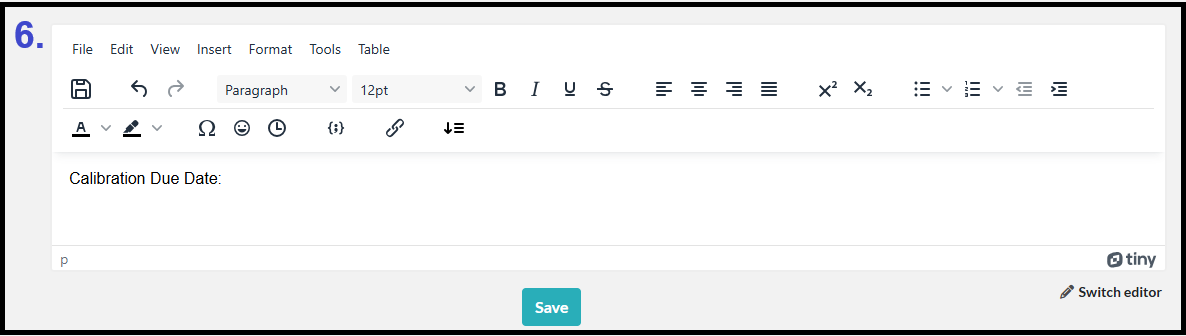
5. Main Text
The main text field includes a variety of options for tracking data. Click each tab to see additional formatting abilities: File, Edit, View, Insert, Format, Tools, Table.
Note: if you import resources using an excel sheet, the excel sheet can include the name of the resource and any information you want displayed in the main text area.
Additionally, you can import resources using an excel sheet. The excel sheet can include the name of the resource and any information you want displayed in the main text area. More details on importing below.
6. Meta Data Fields
You can track meta data via specific fields below the main text. These fields can be grouped together for organization.
When creating a new field, you can select the group, type of field, name of the field, any description, and enter in selection choices for dropdown menu or radio buttons.
You can also choose:
- Whether data in that field is copied to a new resource.
- Whether that field is required.
- Whether that field is read-only (not editable).
You can also Load Fields from other Resource Categories to reduce time in repeating fields you have set up for other categories.
7. Attached Files
Any files can be uploaded to the template to be automatically included in experiments created from this template. Files can be versioned and archived as needed.

8. Steps
Steps can be added to the Resource Template and edited for each individual resource.

Steps can be used to track sequential workflows or to set deadlines for upcoming tasks.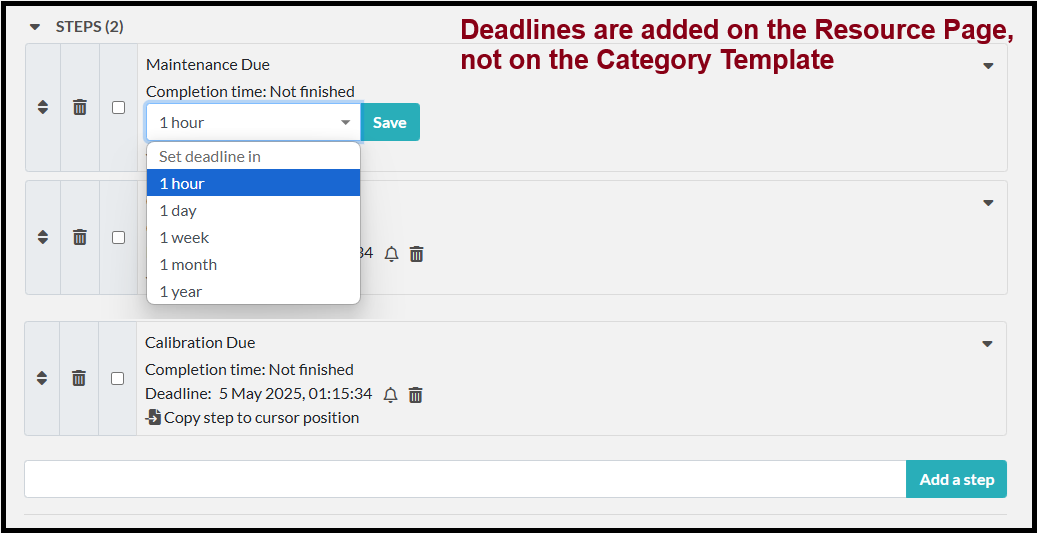
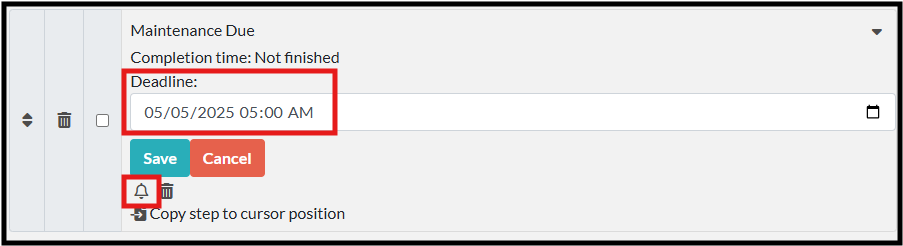
In a resource (not the template), once you set a deadline, you can edit the information to a specific day and time, as well as turn on the notification using the bell symbol.
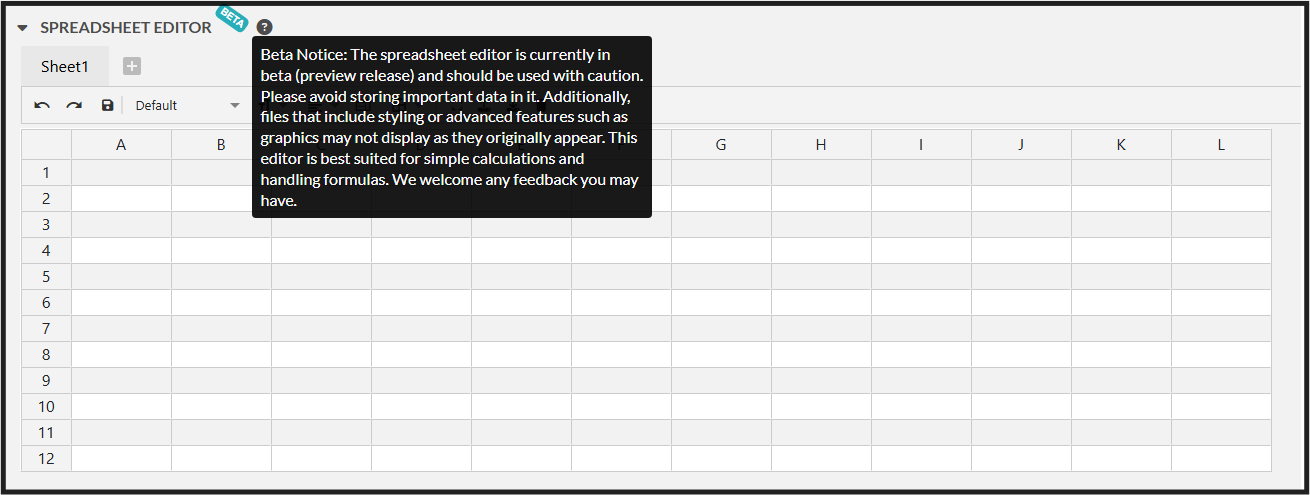
*Coming Soon: Spreadsheet Editor
9. Linked Experiments
Admins can set experiments to automatically link to any resource created from this template.
Or users can link individual experiments and resources once created.
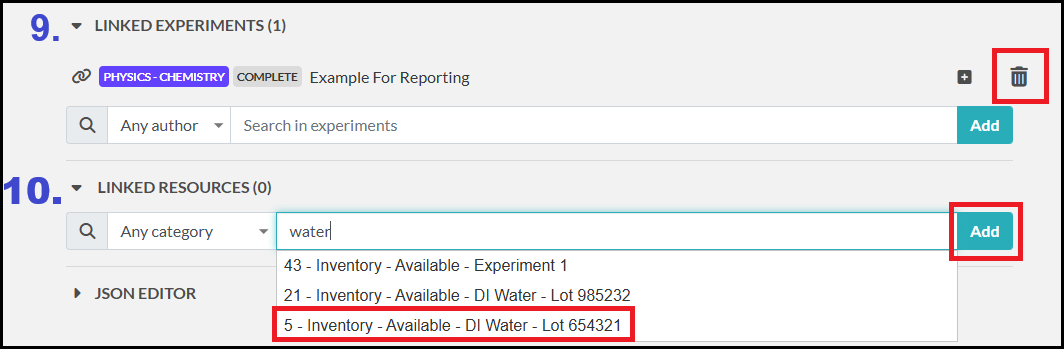
To link an experiment, start typing the title of the experiment in the field and select the correct option and click Add.
To delete a linked experiment, click the trash can next to it.
10. Linked Resources
Admins can set any resource to automatically link to any resource created from this template.
Or users can link individual resources once created.
To link a resource, start typing the title of the resource in the field and select the correct option and click Add.
To delete a linked resource, click the trash can next to it.
11. Compounds
The compounds section gives you the ability to link compounds that have been imported into the ELN from PubChem. You can view the warning symbols and additional information.

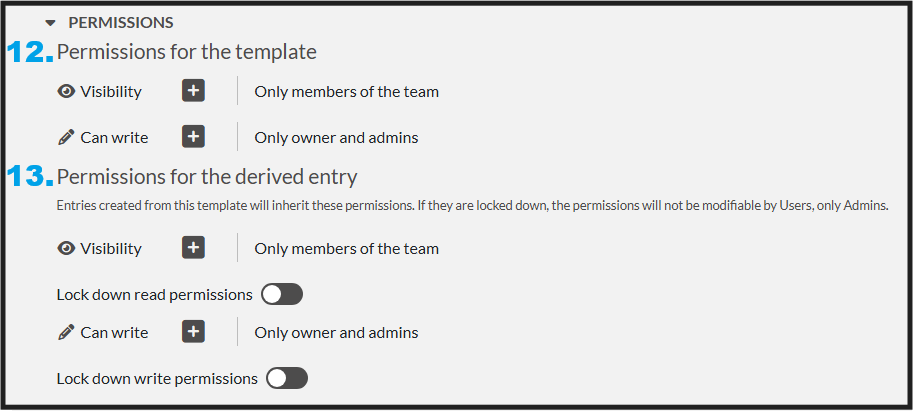
12. Permissions for the Resource Template
Permissions for the resource template are to set permissions for who can see the resource template and who can edit it.
See Resources Permissions Page for more information.
13. Permissions for the Derived Resource
Permissions for the Derived resource are to set permissions for who can see the newly created resources and who can edit that resource. The template can lock the permissions for derived resources so that the permissions can not be changed.
See Resources Permissions Page for more information.