
3. Challenges in Academic Research Data Management
Academic research operates in a uniquely complex environment. Unlike industry laboratories, which often benefit from standardized processes and centralized governance, academic labs are decentralized by design. Individual research groups operate with significant autonomy, choosing their own tools, methods, and data management practices.
While this autonomy fosters innovation, it also introduces significant challenges. Data is generated in diverse formats, stored across multiple systems, and managed with varying levels of rigor. As research becomes more collaborative and data-intensive, these inconsistencies create friction that can hinder progress.
The increasing emphasis on reproducibility, transparency, and compliance further amplifies these challenges. Funding agencies, journals, and regulatory bodies now expect structured, accessible, and auditable data. Meeting these expectations requires systems that can bring order to the inherent complexity of academic research.
Data Fragmentation and Loss
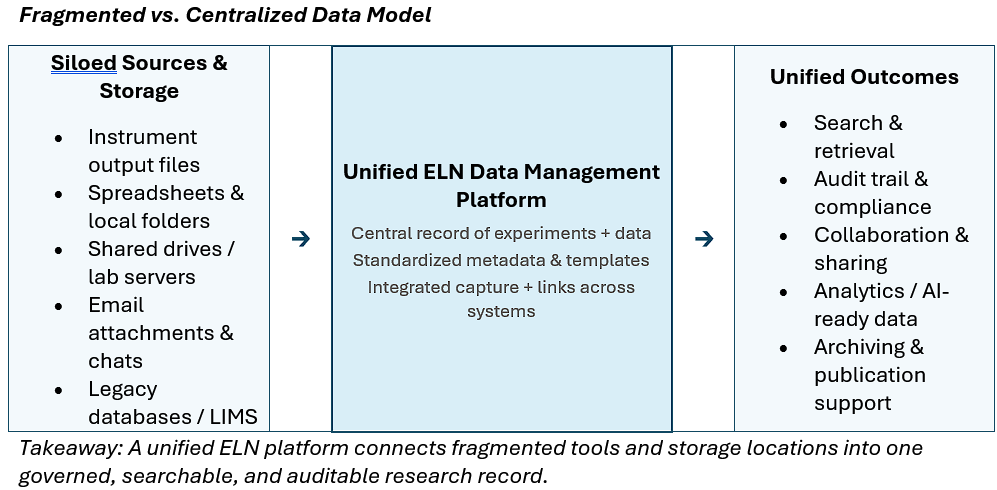
One of the most persistent challenges in academic research is data fragmentation. Researchers often store data in a variety of locations, including personal laptops, external drives, departmental servers, and cloud-based platforms. Each of these storage methods has its own advantages, but together they create a fragmented data landscape.
This fragmentation makes it difficult to locate and access data when it is needed. Researchers may spend significant time searching for files, reconstructing datasets, or recreating experiments because original data cannot be found. This inefficiency slows progress and reduces productivity.
Data fragmentation also increases the risk of data loss. Files stored on personal devices may be lost due to hardware failure, accidental deletion, or personnel turnover. When researchers leave an institution, their data often leaves with them, creating gaps in institutional knowledge.
A centralized system, such as an ELN, addresses these issues by providing a single, structured repository for research data. By consolidating data into a unified platform, institutions can improve accessibility, reduce duplication, and preserve valuable information over time.
Collaboration Barriers
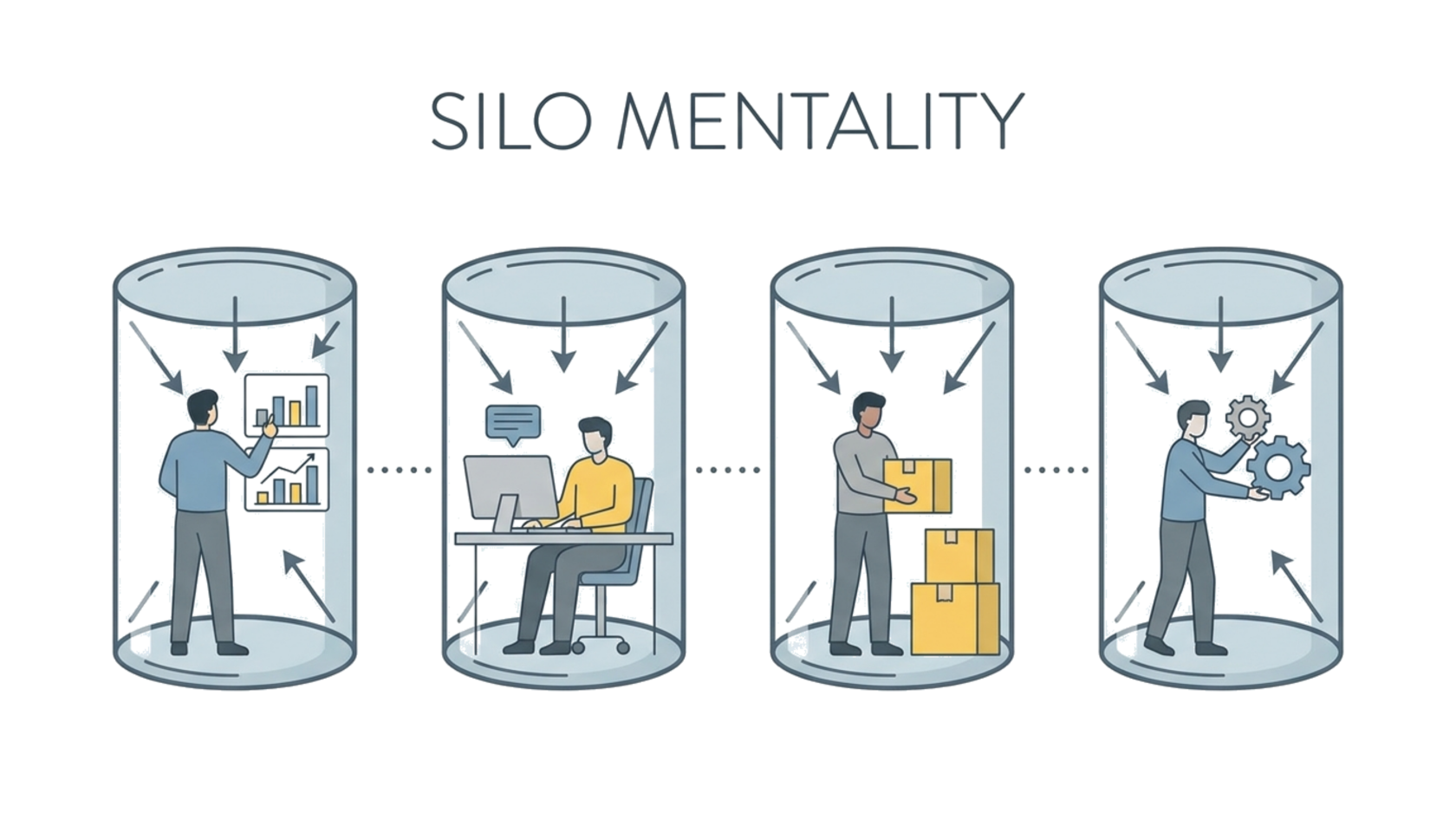
Collaboration is a cornerstone of modern research, yet it is often hindered by inconsistent tools and practices. Different labs may use different file formats, naming conventions, and documentation methods, making it difficult to share and interpret data.
These inconsistencies create barriers that slow down collaborative efforts. Researchers may need to spend time converting data formats, clarifying methodologies, or reconciling discrepancies between datasets. This additional effort reduces the efficiency of collaboration and can lead to errors.
In multi-institutional projects, these challenges are even more pronounced. Differences in infrastructure, policies, and technologies can create additional obstacles to effective collaboration. Without a standardized platform, sharing data across institutions becomes a complex and time-consuming process.
ELNs help overcome these barriers by providing a common framework for documentation and data management. By standardizing how data is recorded and shared, they enable more seamless collaboration and improve the efficiency of research teams.
Compliance and Reproducibility Issues
The importance of compliance and reproducibility in research has grown significantly in recent years. Funding agencies and journals increasingly require researchers to provide detailed documentation of their methods and data, ensuring that results can be validated and reproduced.
However, achieving reproducibility is challenging without structured documentation systems. Inconsistent record-keeping, missing data, and lack of traceability can make it difficult to replicate experiments. This undermines confidence in research findings and can impact funding and publication opportunities.
Compliance requirements add another layer of complexity. Researchers must adhere to data protection regulations, institutional policies, and funding agency guidelines. These requirements often include maintaining audit trails, securing sensitive data, and ensuring proper data management practices.
ELNs address these challenges by providing structured, auditable records of research activities. Features such as version control, time-stamping, and access controls ensure that data is both traceable and secure, supporting compliance and reproducibility.
Intellectual Property Concerns
In academic research, intellectual property (IP) can have significant value, particularly in fields with commercial applications. Proper documentation is essential for establishing ownership and protecting discoveries.
Incomplete or poorly managed records can jeopardize IP claims. Without clear evidence of when and how a discovery was made, it may be difficult to secure patents or defend ownership rights. This can result in lost opportunities for commercialization and collaboration.
ELNs provide a robust solution to this problem by maintaining detailed, time-stamped records of research activities. These records serve as a verifiable history of the work, supporting IP claims and ensuring that contributions are properly documented.
In addition, ELNs enable institutions to maintain centralized records of research activities, reducing the risk of data being lost or misattributed. This strengthens the institution’s ability to manage and protect its intellectual assets.
Common Pitfall
 A common mistake in addressing these challenges is attempting to solve them with isolated tools. While individual solutions may address specific issues, they often fail to provide a comprehensive approach to data management.
Institutions that adopt fragmented solutions may find themselves facing the same challenges in a different form. Without a unified platform, data remains siloed, workflows remain inconsistent, and collaboration remains inefficient.
The key to overcoming these challenges is adopting an integrated approach. ELNs, particularly those designed to connect with other systems, provide a foundation for building a cohesive research infrastructure.